




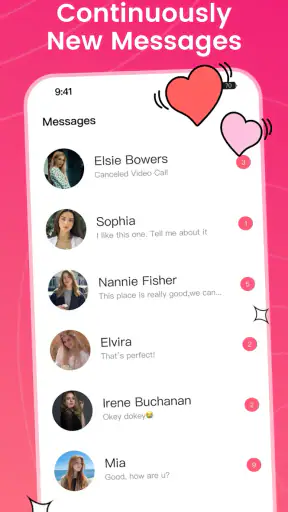
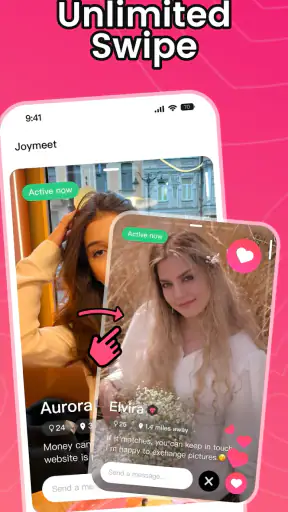

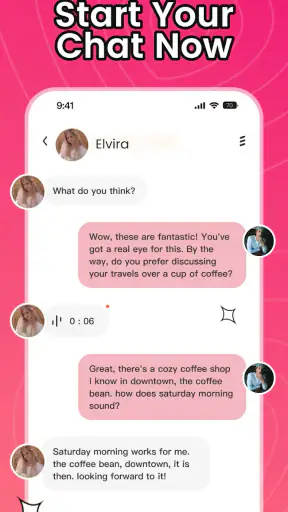
I approached Joymeet Dating App: Local Date as someone trying to make online dating feel less overwhelming, not as a person collecting endless matches. It is a social app from PinkTrip Technology Limited that focuses on meeting singles nearby, starting conversations, and deciding whether a chat deserves a real date. That local angle matters: the app makes more sense when you want to connect with people who could realistically become part of your everyday life, rather than simply browse profiles from far away.
The app is free to install, although it includes optional in-app purchases ranging from $3.99 to $99.99 per item. It is intended for mature users aged 17 and over, and it runs on Android 7.0 or later. I would not describe it as a quiet, private journal for relationships; it is an active dating environment, so your results depend heavily on how carefully you present yourself and how thoughtfully you handle conversations.
What to expect before you start matching
The first thing I noticed is that Joymeet is easier to understand if I treat it as a process rather than a magic matchmaker. The useful path is simple: create a profile that gives people something to respond to, look through nearby possibilities with realistic expectations, begin a respectful chat, and move slowly enough to judge whether the other person is genuine. The app can help open the door, but it cannot replace communication or common sense.
Its audience is already fairly substantial, with over 1 million installs, an average rating of 4.5 from around 67 thousand ratings, and roughly 5.4 thousand written reviews. Those figures suggest that Joymeet has found a real audience, but they should not be mistaken for a promise that every local area will be equally active. A dating app can feel lively in one neighborhood and much quieter in another, especially when your preferences are narrow.
I found the local focus most appealing for people who want practical dating. If you are hoping to meet someone for coffee after a good conversation, or you want a relationship that does not require constant travel, nearby discovery is a sensible starting point. It is also useful for someone new to a city who wants to meet people beyond work or existing social circles.
On the other hand, I would skip it if you dislike profile-based first impressions, do not want to chat with strangers, or are looking for a highly specialized dating community. A broader mainstream service may offer a deeper pool in some places, while a niche service can be better when a particular lifestyle, interest, or relationship goal is central to your search. Joymeet is more suitable when proximity and ordinary conversation are your priorities.
The most important expectation to set is this: a match is only an invitation to investigate compatibility, not evidence of trust. I would keep the first exchanges inside the app, avoid sharing sensitive information too quickly, and pay attention to whether a person answers naturally. Someone who immediately pressures you to move elsewhere, asks for money, or avoids basic questions is not worth pursuing, regardless of how attractive the profile looks.
How the free model affects the experience
You can begin without paying, which makes the app approachable for first-time users. The optional purchases may become tempting if you feel impatient or want more control over your activity, but I would not spend immediately. First learn how many suitable profiles appear in your area, how comfortable you are with the conversation flow, and whether the app fits your dating goals.
That trial period is especially important because the value of a dating app is personal. A high overall rating cannot tell me whether the nearby user base matches my age, location, or intentions. I would use the free experience to test the basics: can I create a profile that feels accurate, can I find people I would genuinely talk to, and can I recognize conversations that are moving somewhere?
What I would prepare before opening the app
Before signing up, I would choose a recent, clear main photo and prepare a short description that says more than “ask me anything.” A useful profile gives a potential match an easy opening. Mentioning a favorite weekend activity, the kind of connection you want, or a small detail about your routine is more helpful than trying to sound impressive.
I would also decide in advance what “nearby” means for me. Someone living in a large city may be comfortable traveling across town, while someone in a spread-out area may need a wider practical radius. The best match is not always the closest profile; it is the person whose location, schedule, and expectations make meeting realistic.
Setting up a profile that leads to better conversations
The setup stage deserves more care than it usually receives. I would avoid treating it like a form to finish as quickly as possible. Every vague answer creates more work later because the other person has no clear reason to message you. A profile does not need to reveal your entire life, but it should communicate enough personality to separate you from a blank screen.
For photos, I would favor variety without turning the profile into a photo album. A clear face photo helps people recognize who they are speaking with, while another image showing an everyday interest can make the profile feel more believable. I would avoid heavily edited pictures or images where it is difficult to tell which person is the account owner. The goal is not perfection; it is an honest first impression.
For written details, I would use a simple three-part approach: one thing I enjoy, one thing I am curious about, and one kind of connection I am open to. That structure gives a stranger several possible conversation starters. It also helps filter people who want something completely different, saving time that would otherwise be spent explaining basic expectations after matching.
Because Joymeet is designed for mature users, I would be direct without being careless. Do not publish your workplace address, daily route, phone number, or information that makes it easy to identify where you live. Being open about personality is different from exposing personal security details. I can be warm and approachable while still keeping boundaries.
The first meaningful action is better than the first quick match
Once the profile is ready, I would not measure success by how fast I receive attention. The better first action is finding one profile that genuinely interests me and sending a message connected to something visible there. “Hi” is easy to ignore because it demands that the other person do all the work. A specific, relaxed question creates a fairer exchange.
For example, if a profile mentions weekend cooking, I might ask which dish they make when they want something simple. If it shows a local outdoor activity, I could ask whether they prefer short walks or longer day trips. These questions are not clever tricks. They demonstrate that I looked at the profile and make it easier for the other person to answer naturally.
I would keep the first message short. A long introduction can feel like pressure, while a single thoughtful question leaves room for a conversation to develop. I would also avoid sending several follow-ups if there is no response. Respecting silence is part of using a dating app well, and it prevents a promising service from becoming stressful.
Turning a chat into a realistic next step
A good conversation should gradually reveal whether meeting would be comfortable. I would look for balanced participation: both people ask questions, both share small details, and neither person dominates the exchange. If every answer is generic, the profile may not reflect the person behind it. If the conversation becomes intense immediately, I would slow down rather than confuse strong attention with genuine compatibility.
When the exchange feels consistent, the next step can be a simple public meeting, such as coffee during the day. I would tell a friend where I am going, arrange my own transport, and keep the first meeting easy to leave. This is not pessimism; it is a practical way to protect both people while they are still strangers.
A realistic weekday example would be someone who installs Joymeet after work, completes a profile that mentions local food markets, and notices another person who enjoys trying new cafés. Instead of trying to arrange a date immediately, the user starts with a question about a favorite type of food. After a few comfortable exchanges, they suggest a short coffee near a busy public place. That path is more useful than chasing a large number of matches because it connects the app to an actual decision.
Confusion that can make the app feel less effective
One common mistake is assuming that nearby automatically means compatible. Location solves only one part of dating. Two people can live close together and still want different levels of commitment, different communication styles, or completely different routines. I would use proximity as a practical filter, not as a substitute for learning about the person.
Another source of confusion is the difference between attention and progress. A busy inbox can feel encouraging, but several shallow chats are less valuable than one respectful conversation with a person who answers clearly. I would periodically close conversations that have become repetitive or uncomfortable instead of keeping every possibility alive.
I would also be cautious with requests to move quickly away from the app. Sometimes people prefer another messaging service, but there is no reason to rush before basic trust exists. Keeping early communication in one place makes it easier for me to maintain boundaries and notice suspicious behavior. If someone becomes angry because I want to proceed slowly, that reaction is useful information.
Paid options can create another kind of confusion. Since the app is free with optional purchases, I would not assume that spending guarantees better chemistry or a safe date. Before buying anything, I would ask whether the purchase solves a real problem I have experienced or merely responds to impatience. If I am not finding suitable people organically, paying may not fix a mismatch between my location and the available audience.
Privacy, safety, and emotional boundaries
Dating apps require a slightly different kind of attention from ordinary social networks because conversations can become personal quickly. I would avoid sending identity documents, financial information, intimate images, or money to someone I have not met and verified through normal interaction. A person can appear charming while still presenting a serious risk.
I would also listen to discomfort early. If a match ignores a clear boundary, repeatedly demands instant replies, or turns every conversation toward sexual content, I would stop engaging. The mature age rating does not mean every interaction will suit every adult, and it does not remove the need to choose what I am comfortable discussing.
There is an emotional side to safety as well. I would not let a promising chat become my only source of companionship after a day or two. Keeping normal routines and talking with trusted friends makes it easier to judge the connection clearly. Joymeet works best as a tool for meeting people, not as a replacement for an existing support network.
How it compares with familiar dating alternatives
Compared with meeting someone through friends, Joymeet offers a faster way to encounter people outside an existing circle, but it removes the reassurance that a mutual acquaintance can provide. That means I gain reach and convenience while taking on more responsibility for checking consistency and setting boundaries.
Compared with a broad dating service that emphasizes a very large pool, Joymeet’s nearby-first appeal feels more practical for people who want a date they can actually arrange. The trade-off is that a smaller local pool may become repetitive, particularly in less populated places or for users with very specific preferences.
Compared with niche platforms, Joymeet is less useful when a specialized identity or interest is the main basis of compatibility. I would choose a more focused alternative if I needed the service to organize dating around a particular community. I would choose Joymeet when I want a general social dating experience and care strongly about meeting someone within a manageable distance.
Who should continue, and who should stop here
I think Joymeet is worth trying for a first-time user who wants a free starting point, lives near an active population, and is willing to write real messages rather than swipe or browse passively. It can be a good fit for someone who wants a nearby relationship and prefers taking the process one conversation at a time.
I would be less enthusiastic for a person who expects instant results, wants guaranteed compatibility, or feels uncomfortable rejecting conversations. I would also look elsewhere if the local selection does not reflect my goals after a fair trial. No dating app can manufacture a suitable community where there is not enough activity, and paying more should not be the first response to that problem.
The next step after installation
The current version is 1.8.8, and the app is available for Android users on version 7.0 or later. My advice is to begin with the free experience, complete the profile thoughtfully, and judge the app by the quality of conversations rather than by the number of notifications. Give yourself a clear personal test: can you find at least one person whose profile invites a genuine question, and can the exchange remain respectful and balanced?
If the answer is yes, suggest a modest public meeting only after the conversation has earned that step. If the answer is no, adjust the profile once, reconsider how narrow your preferences are, and then decide whether Joymeet’s local audience is right for you. Repeatedly forcing an unproductive search is not persistence; it is wasted energy.
My overall impression is that Joymeet Dating App: Local Date is most convincing when used deliberately. It gives first-time daters a straightforward route from discovery to conversation, and its nearby focus can make a potential relationship feel more achievable than a distant match. The limitations are equally real: local activity varies, profiles require effort, optional purchases need restraint, and users must handle safety themselves.
For me, the app earns a recommendation as a practical experiment rather than a promise of true love. Install it if you want to meet nearby singles, take time to present yourself honestly, and measure success by one meaningful exchange instead of a crowded match list. That approach gives Joymeet its best chance to become useful while keeping your expectations, spending, and personal boundaries under control.


